Thursday, March 8, 2012

Medical mysteries: Was crying caused by man’s severe depression?


Helayne Seidman/FOR THE WASHINGTON POST - Richard Anderson and his wife Rose in their Staten Island home. Richard suffered a severe traumatic brain injury at 47 which developed into uncontrollable crying. A new drug has helped treat his disorder called pseudobulbar affect


Of all the adjustments forced on Rose Anderson and her family, among the hardest was dealing with the crying jags.
Around 9 p.m. on Aug. 4, 2004, while Anderson and her family were crossing the street from a New Jersey beach boardwalk to their hotel, a drunk driver barreled into her husband, Richard. He was flung 26 feet before slamming headfirst onto the pavement.
More on this Story
A 47-year-old manager for the New York City government, Richard underwent emergency brain surgery and spent three weeks in a coma, followed by nearly two months in the hospital. He suffered a severe traumatic brain injury that left him with permanent cognitive and speech problems and robbed him of his sense of smell and taste.
“They were preparing me for a lifetime of therapies,” recalled Rose of the weeks her husband spent at Kessler Institute for Rehabilitation in East Orange, N.J.
But no one prepared the Andersons for Richard’s unpredictable and uncontrollable weeping, which began weeks after the accident and seemed to worsen with time.
“He would cry with almost anyone,” his wife recalled. Thoughts of his dogs, his family or even happy occasions could trigger tears. His teenage daughters found the incidents, which occurred several times a week, almost unbearable.
“As things got better, this shined brighter,” said Richard Anderson, who describes himself as a “very chauvinistic kind of guy” who was mortified by his inability to control his emotions. “It was very upsetting to me to have tears just rolling down my fac....
Next..............................

Transformed Patient Unveils ‘New Self’ to Inspire Guests at Heart & Stroke Seminar

Heart disease is the No. 1 killer of women over the age of 25, in the United States, regardless of race or ethnicity. More than 8 million women are affected by this disease – a statistic that Long Beach Memorial doesn’t take lightly. The Center for Women’s Cardiac Health and Research at Long Beach Memorial focuses on prevention of heart disease, exclusively in women, offering cardiovascular screenings and individualized care plans.

Pet Therapy: How Animals And Humans Heal Each Other


Ryan Shank-Rowe, 9, takes part in a therapeutic riding program at Little Full Cry Farm in Clifton, Va., last month.
Maggie Starbard/NPR Ryan Shank-Rowe, 9, takes part in a therapeutic riding program at Little Full Cry Farm in Clifton, Va., last month.
Those of us who own pets know they make us happy. But a growing body of scientific research is showing that our pets can also make us healthy, or healthier.
That helps explain the increasing use of animals — dogs and cats mostly, but also birds, fish and even horses — in settings ranging from hospitals and nursing homes to schools, jails and mental institutions.
  Take Viola, or Vi for short. The retired guide dog is the resident canine at the Children's Inn on the campus of the National Institutes of Health in Bethesda, Md. The inn is where families stay when their children are undergoing experimental therapies at NIH.
Vi, a chunky yellow Labrador retriever with a perpetually wagging tail, greets families as they come downstairs in the morning and as they return from treatment in the afternoon. She can even be "checked out" for a walk around the bucolic NIH grounds.
 Thelma Balmaceda, age, 4, pets Viola, the resident canine at the Children's Inn on the campus of the National Institutes of Health in Bethesda, Md. Families stay at the inn when their children are undergoing experimental therapies at NIH.
Melissa Forsyth/NPR Thelma Balmaceda, age, 4, pets Viola, the resident canine at the Children's Inn on the campus of the National Institutes of Health in Bethesda, Md. Families stay at the inn when their children are undergoing experimental therapies at NIH.
"There really isn't a day when..............
Next............................

Aspirin lowers stroke risk from trans fat’ in older women

Aspirin lowers stroke risk from trans fat’ in older women
Washington: Older women whose diets include a substantial amount of trans fats are more likely than their counterparts to suffer an ischemic stroke, a new study has shown.

However, according to the findings from University of North Carolina at Chapel Hill researchers, the risk of stroke associated with trans fat intake was lower among women taking aspirin.


The study of 87,025 generally healthy postmenopausal women aged 50 to 79 found that those whose diets contained the largest amounts of trans fats were 39 percent more likely to have an ischemic stroke than women who ate the least amount of trans fat......
Next........................

Physicians Order Costly, Redundant Neuroimaging for Stroke Patients

U-M researchers found that most patients underwent both MRIs and CTs; neuroimaging biggest source of escalating stroke care costs
ANN ARBOR, Mich., March 5, 2012 /PRNewswire-USNewswire/ -- Neuroimaging for stroke patients may be unnecessarily costly and redundant, contributing to rising costs nationwide for stroke care, according to University of Michigan research.
The research, published in the Annals of Neurology, found that 95 percent of stroke patients who received magnetic resonance imaging (MRI) also had a computed tomography (CT) scan.
"Compared to CT, MRI is a more accurate test for stroke," says James F. Burke, M.D., lead author of the study and a clinical lecturer in the University of Michigan Medical School's Department of Neurology. "But our results showed that MRI is not replacing CT as the primary stroke neuroimaging study — instead, patients are getting bo

Read more here: http://www.bradenton.com/2012/03/05/3918899/physicians-order-costly-redundant.html#storylink=cpy

Next..................................

Drug Might Limit Stroke Brain Damage

An experimental drug could help protect against brain damage during a stroke, reducing the risk of permanent disability.
An experimental drug could protect stroke victims from brain damage. The treatment has shown very promising results in animal tests, and early results with humans are also encouraging.

There is currently only one effective treatment for stroke. Tissue plasminogen activator (tPA) can dissolve the blood clots that cause a stroke.
But it has to be given very soon after symptoms appear, and doctors first have to make sure that the stroke was not caused by a ruptured blood vessel, in which case tPA can make the situation a lot worse...
Next....................................

Monday, January 16, 2012

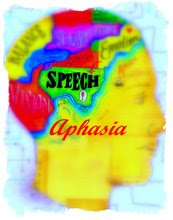
Bill Lohmann: Seeking the right words about aphasia

Elaine Ackman has spent much of her life speaking — in voice and deeds — on behalf of others.
Now she struggles to find the right words.
Ackman, 80, of Henrico County, suffers from aphasia, a communication disorder that affects the expression and comprehension of language — the same condition that afflicts Arizona Rep. Gabrielle Giffords, whose aphasia was brought on by a brain injury caused by a gunshot wound to the head.
In Ackman's case, the culprit was a stroke, the most common cause of aphasia, according to the National Aphasia Association. As far as speaking, she has had to relearn almost everything.
"I couldn't remember anything," Ackman said Tuesday, sitting at her kitchen table Tuesday morning, as she tried to recall that day almost five years ago when the words went away.
The road back has been long. Through intensive therapy and the great support of family and friends, Ackman has regained much of her ability to communicate, but not all. To look at her, you would have no clue she has any problem at all, no idea of the frustration she feels when she tries to express herself and simply can't.
"She gets stuck on a lot of words, and she doesn't have a lot of confidence when it comes to talking to people," said Lynn Burris, one of Ackman's four children. She sometimes finds it easier to just say nothing.
Which is why Burris thought it would be helpful for her mother to connect with other aphasia patients. She believes meeting others facing the same challenges would make her mom less self-conscious and could go a long way to helping her grow more comfortable talking to others....Next